


This newsletter is brought to you by the donor acquisition approach that helps you turn $1 into $2.
I’m Keith Edwards. I’ve worked in politics for years—on campaigns, causes, and comms strategy. But this past year, I did something new: I became a full-time YouTuber.
It’s been a crash course in how digital influence actually works now. I’ve posted hundreds of videos and grown an audience from zero subscribers to a million in 15 months. Today, I reached half a billion views. Now, strangers will come up to me and say they watch my channel. That part was a surprise.
In the past year, I’ve learned more about audiences, about trust, and about what kinds of political content actually break through in a fractured, chaotic media ecosystem than I ever did working as a political operative. I made a video highlighting some of my takeaways from the past year, and wanted to write some of them down and share them with you all here.
More on that below, but first…
Digital ad spending, by the numbers:
FWIW, U.S. political advertisers spent just under $11.2 million on Facebook and Instagram ads last week. Here were the top ten spenders nationwide:
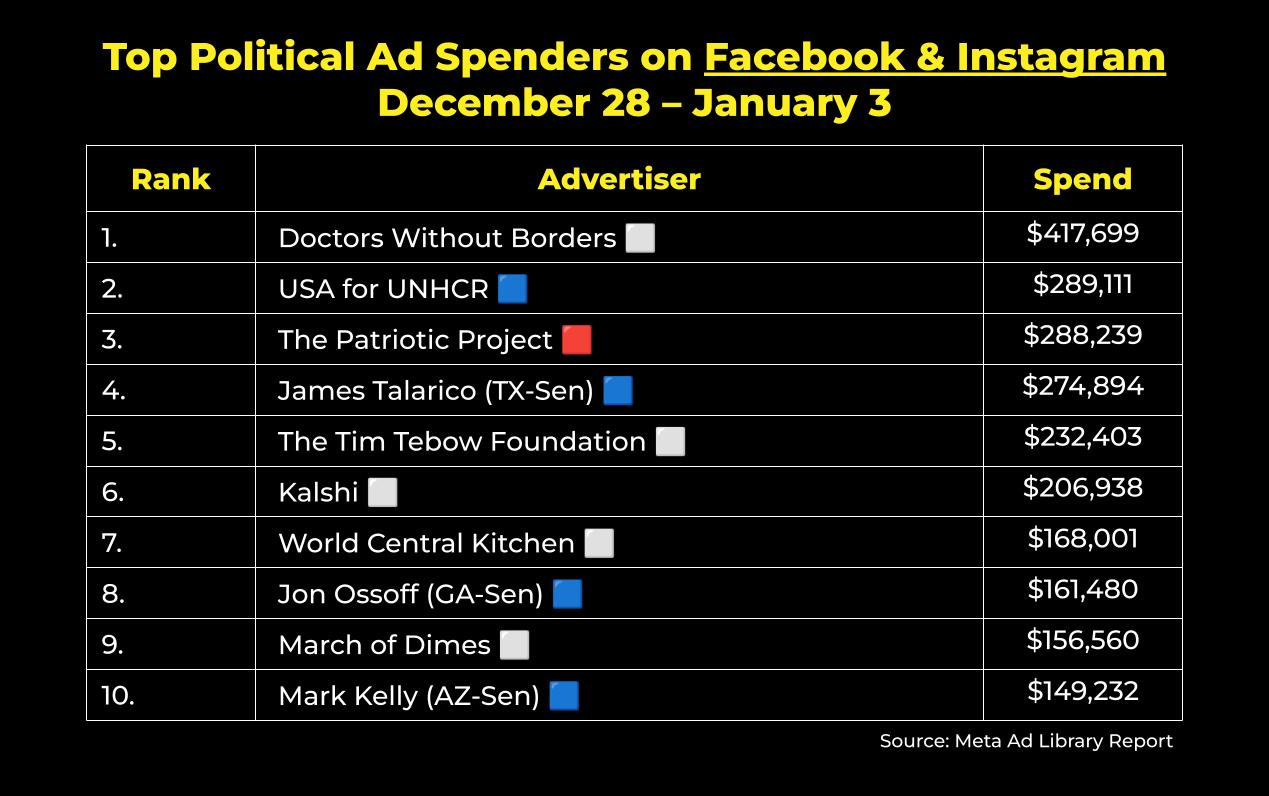
Three Democratic senate candidates, Talarico, Ossoff, and Kelly, cracked the top 10 list, collectively spending over half a million dollars on Meta ads last week. The GOP side of the aisle was notably absent, perhaps focusing their efforts on a different platform (see below).
Humanitarian groups, which made up about half of this list, ran some serious end-of-year fundraising campaigns, outspending politicians by a mile. Doctors Without Borders dropped more money last week than any two senate candidates combined.
Meanwhile, political advertisers spent about $2.3 million on Google and YouTube ads last week. These were the top ten spenders nationwide:
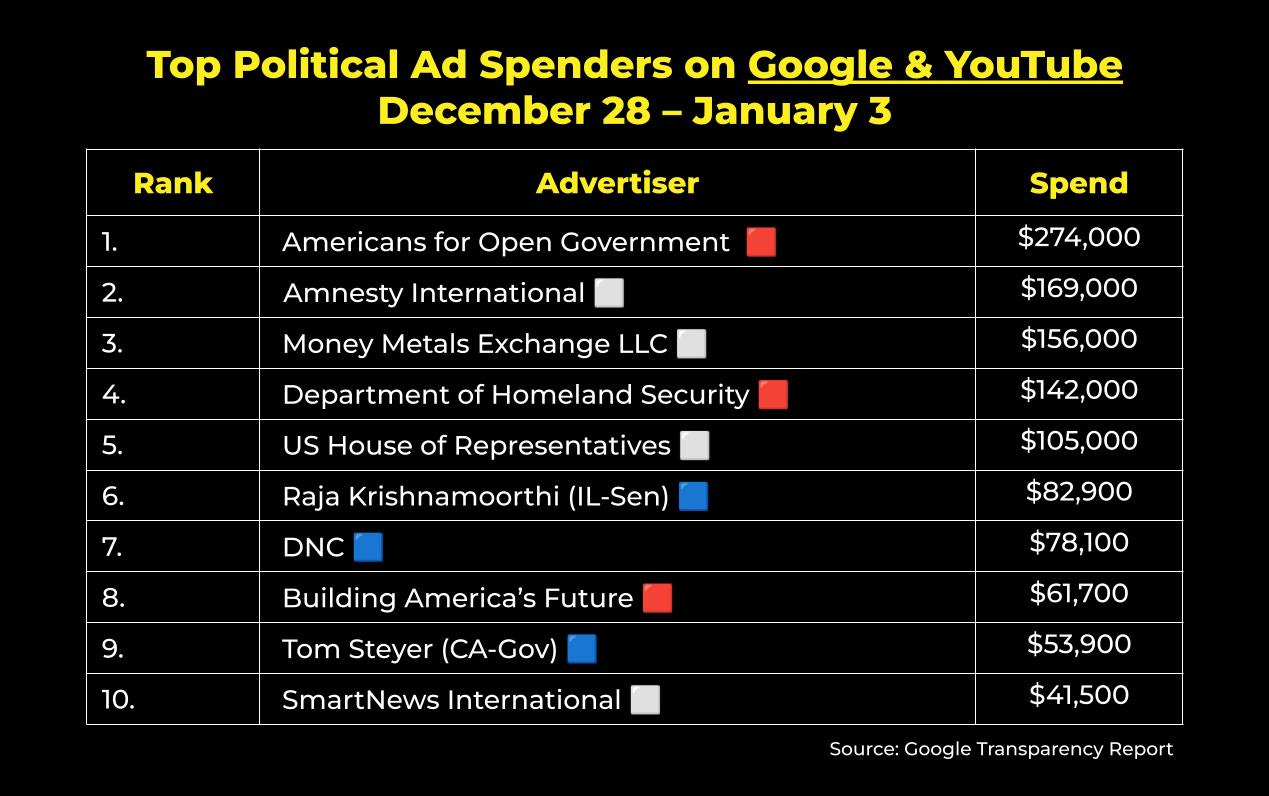
ICYMI: Tom Steyer, who famously spent over $250 million during his 2020 presidential campaign only to come in third with 11% of the vote and no pledged delegates, is now running to succeed Gavin Newsom as governor of California. He spent less than $54K on Google and YouTube ads last week, but it’s safe to say, we can expect that number to get a lot higher in the coming days.
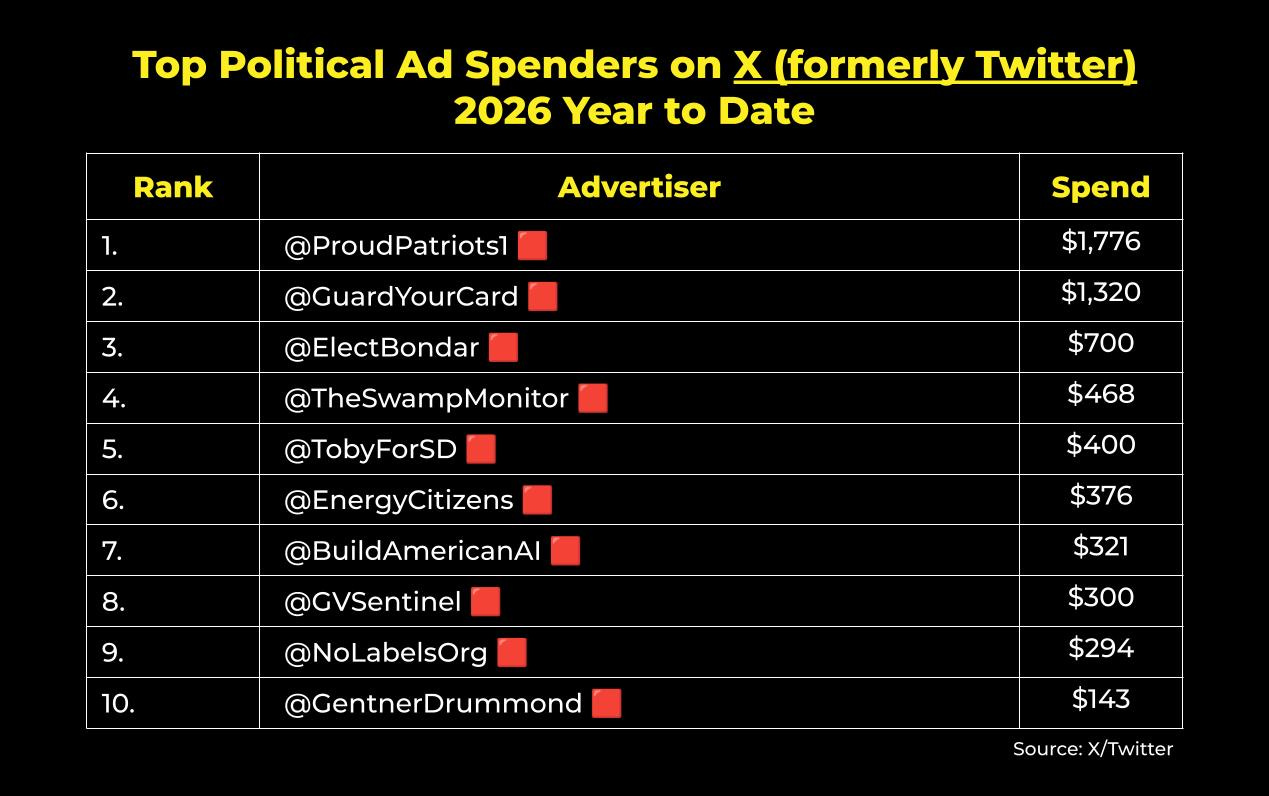
On X (formerly Twitter), political advertisers in the U.S. have spent just $6,700 on ads in 2026 so far. According to X’s political ad disclosure, here are the top spenders year to date… very much presented without comment, but if you’ve been on Twitter/X lately, this won’t come as a surprise:
Snapchat has not yet shared its political advertising data for 2026.
What if you could raise more in 2026?
Groups like Common Cause, Earthjustice, and Amnesty International are setting themselves up to crush it in 2026 with Civic Shout, and you can too.

What I Learned Building a Progressive YouTube Channel in 2025
The early growth strategy: Test → iterate → build
At the start of 2025, I committed to doing this full-time. With 220,000 subscribers and a background in production and branding, I gave the channel a name: The Keith Edwards Show. I added editors, graphics, and a studio.
At first, I didn’t try to reinvent the wheel. I looked at what high-performing progressive channels like MeidasTouch, David Pakman, and Adam Mockler were doing, then tested similar formats and iterated. Repetition and consistency built traction. By the end of the year, I hit 1.1 million subscribers, and had a real business.
In July 2024, I committed to posting one video a day, and that consistency paid off. My channel grew from 5,000 to 100,000 subscribers that month, helped by being in the right place at the right time amid Biden’s withdrawal from the race and the attempted assassination of Trump. My first viral video was about Trump’s attempted assassin, which racked up 80,000 views.
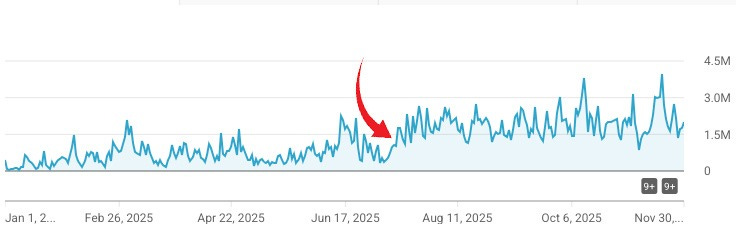
There’s a common misconception that lo-fi production equals authenticity, which an audience will reward with engagement. That’s not true. Early on, I filmed in my bedroom, and it admittedly looked ugly and unprofessional. When I pivoted to full-time and invested in a studio, viewership surged. It was a game changer. Presentation really matters—especially since my viewers are watching me on their TVs, where I’m competing with movies and TV shows.
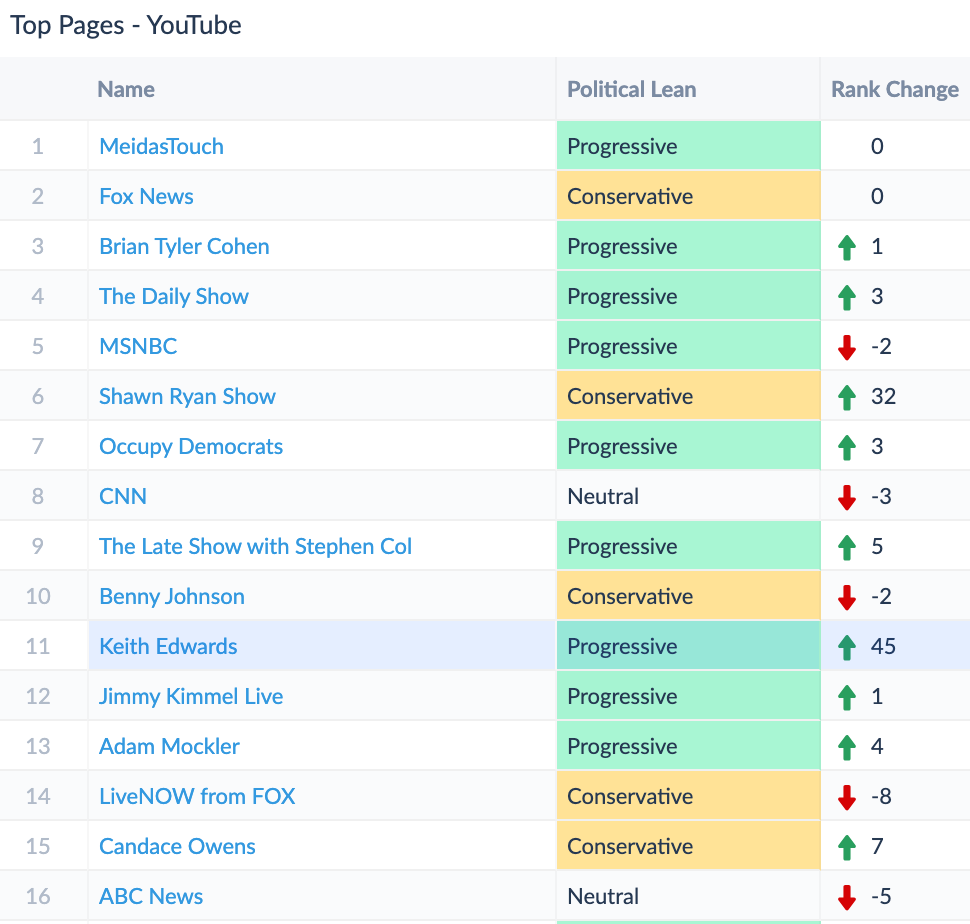
From growth to voice
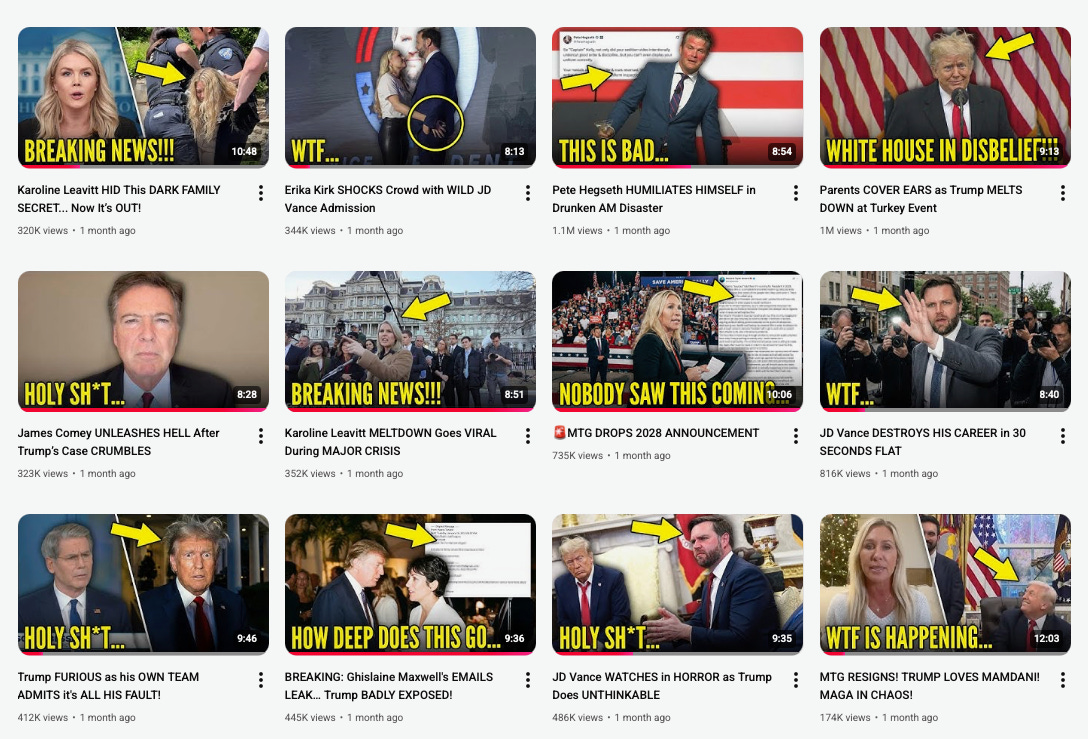
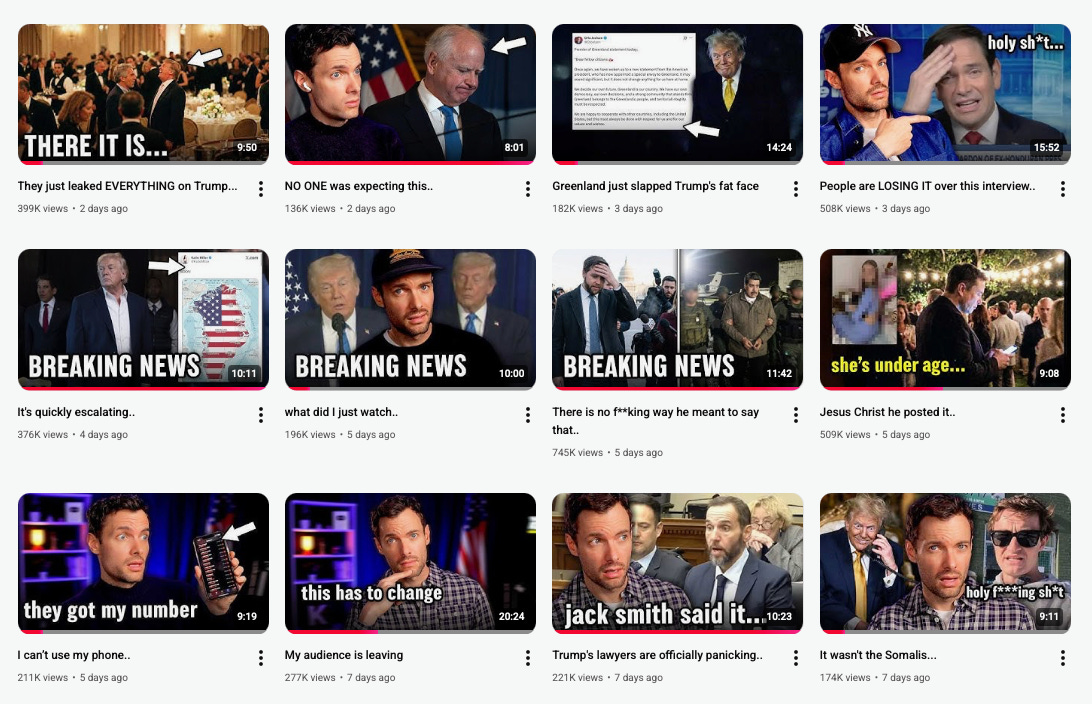
Once the numbers were there, I wanted the tone and presentation to match the kinds of conversations I actually want to have. I’m now trying to move away from clickbait thumbnails and outrage-driven headlines. The content is still sharp, but now it looks sharp, too.That shift has cost me some casual drive-by clicks. But that’s fine. What I’m building now is hopefully more durable: an audience that feels like a community, not a funnel.
Other large progressive channels are starting to shift their tone and packaging too. That’s good. Because while the right is insane, they know how to make their content look approachable. Ours often doesn’t. Nobody wants to share a video—no matter how good it is—when the thumbnail is Trump’s face and the title is dialed to 12.
I’m betting that nuance and honesty win long-term. And so far, the engagement trends suggest that bet is paying off.
Before:
After:
What works now (and what doesn’t)
Political YouTube is still evolving. But there are a few things I’ve learned the hard way:
You don’t need guests to be interesting.
I moved away from doing interviews because I didn’t want the channel to rely on access. Viewers come for my voice. Most interviews perform worse than solo videos. When I do bring on guests, I want them to be real conversations—not just another place for politicians to drop their talking points. The audience finds that boring. And they’re right. Who wants to watch two people on Zoom?Your audience is smarter than you think.
I read as many comments as I can. Sometimes I get 150,000 in a week. The most common sentiment is: “I don’t agree with everything you say, but I like how you say it.” That means a lot. It tells me they feel seen. I push back on Democrats when I think they’re wrong and I try to call things like I see them. That balance has built trust.Success doesn’t mean screaming.
There’s no shortage of performative outrage online, but I’ve found my audience isn’t looking to be yelled at. That doesn’t mean avoiding drama altogether, but there’s a difference between being sensational and being loud. Sometimes the best hooks come from gossip, internet weirdness, or the supporting cast around Trump and I try to keep the tone grounded, honest, and occasionally funny. The goal isn’t to downplay urgency, it’s to make people feel like they’re in on the conversation—not sitting through a lecture.
What’s next
If 2025 was about growth and refining the channel’s brand, 2026 will be about doubling down on that. I want to continue to professionalize my channel: investing in my voice, packaging, and presentation to have a lasting impact.
My relationship with my audience is rooted in deep respect and I want to make content that reflects that. Audiences aren’t stupid. Even if they can’t tell you why they like something, they know it when they see it. This past year has proven that.
I’ve already laid the groundwork, now I’m ready to see where it grows.
What if you could raise more in 2026?
Groups like Common Cause, Earthjustice, and Amnesty International are setting themselves up to crush it in 2026 with Civic Shout, and you can too.
That’s it for FWIW this week. This email was sent to 25,247 readers. If you enjoy reading this newsletter each week, would you mind sharing it on X/Twitter, Threads, or Bluesky? Have a tip, idea, or feedback? Reply directly to this email.
Support COURIER’s Journalism
Democracy dies behind a paywall, so our journalism is and will always be free to our readers.
But to be able to make that commitment, we need support from folks like you who believe in our mission and support our unique model.
