


Hi everyone! I’m Sarah Stamper, a neuroscientist and Chief Research Officer at Murmuration, where we use data to understand how Americans experience their lives, communities, and democracy. We share insights from our research on Murmuration’s Substack.
For today’s FWIW, we’re looking at what the midterms have and haven’t changed about Americans’ outlook on their democracy, and what they say would give them greater confidence in their elected leaders.
More on that below, but first…
Digital ad spending, by the numbers:
Happy Thanksgiving! Election Day has just come and gone, but some folks are already looking ahead to 2028, while others are still dealing with special elections and recounts. As you start in on your leftover turkey, here are two pieces we want to highlight coming out of last cycle and moving into the next one.
A Special to Remember: GA HD-151
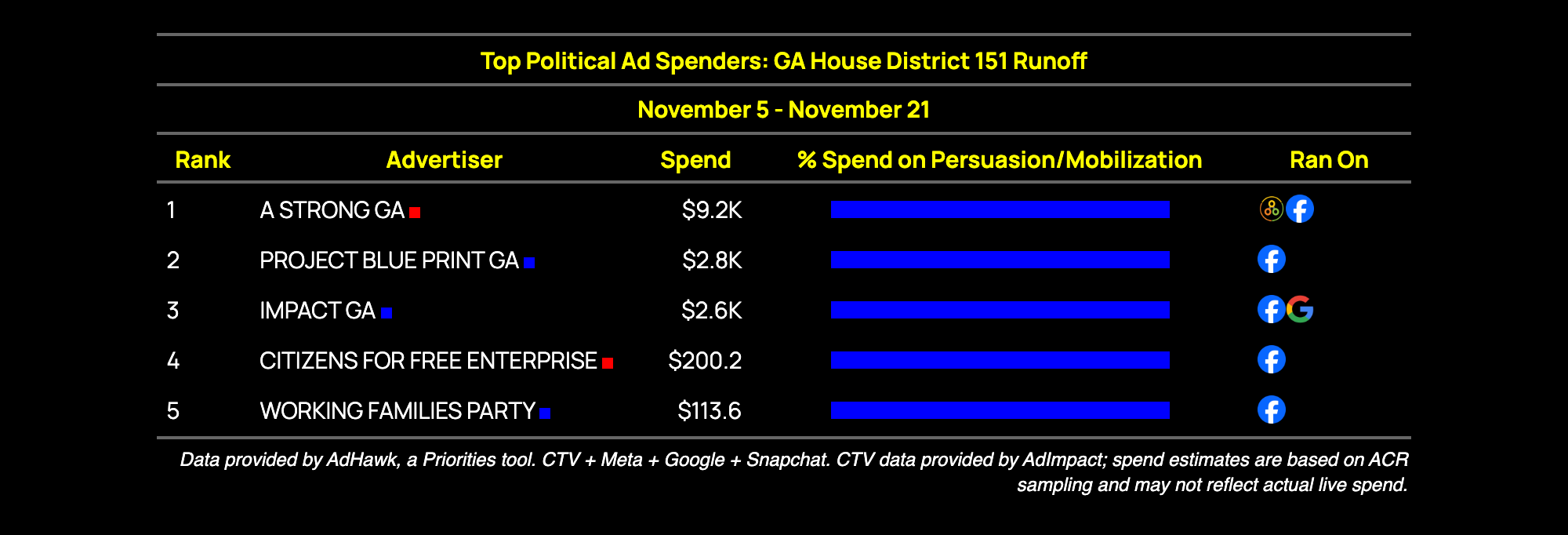
There’s been a lot of hubbub about flips in state legislative chambers this cycle. One of the big surprises was the Georgia State House, where Democrats’ one-seat majority could be bolstered by a win in the 151st district’s special election. Messaging in the race has followed national trends: the Republican wants to protect you from taxes and the liberal takeover, while the Democrat claims he’ll cut costs and fight his opponent’s corruption.
This isn’t the first time Georgia has seen a competitive special election. So far, spending in the race is sitting at around $20k, primarily on CTV and Facebook, ahead of the December 1st election, nearly outpacing the entirety of the general. While these numbers are small in the scheme of federal races, in a district of 60,000 that kind of money can swing the handful of votes needed to make up the margin of victory.
Potential Presidentials’ Pre-Primaries
Following the DNC’s latest announcement that Democratic candidates must disavow Super PACs, it’s worth examining how entities affiliated with some of the potential 2028 contenders have spent already. While many have PACs, only a subset have invested directly in ads. That spending dates back as early as 2023, when Gavin Newsom launched Campaign for Democracy.
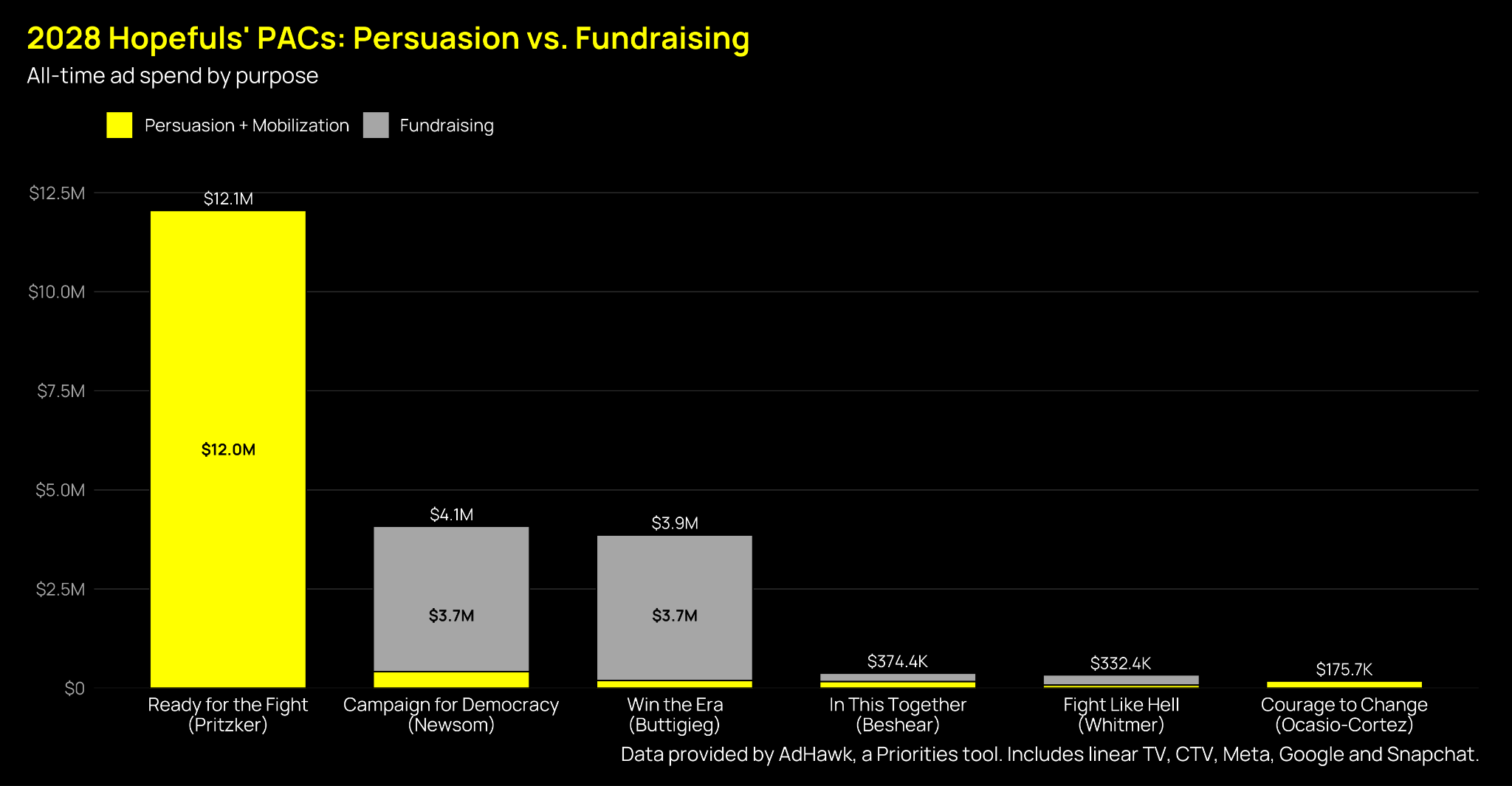
Two entities we’re aware of haven’t spent directly on advertising at all: Shapiro’s New Path PAC and Harris’s Fight for the People PAC.
The strategies vary: Newsom and Buttigieg have largely focused on fundraising and building out donor lists, while Pritzker went all in on some key 2026 races:
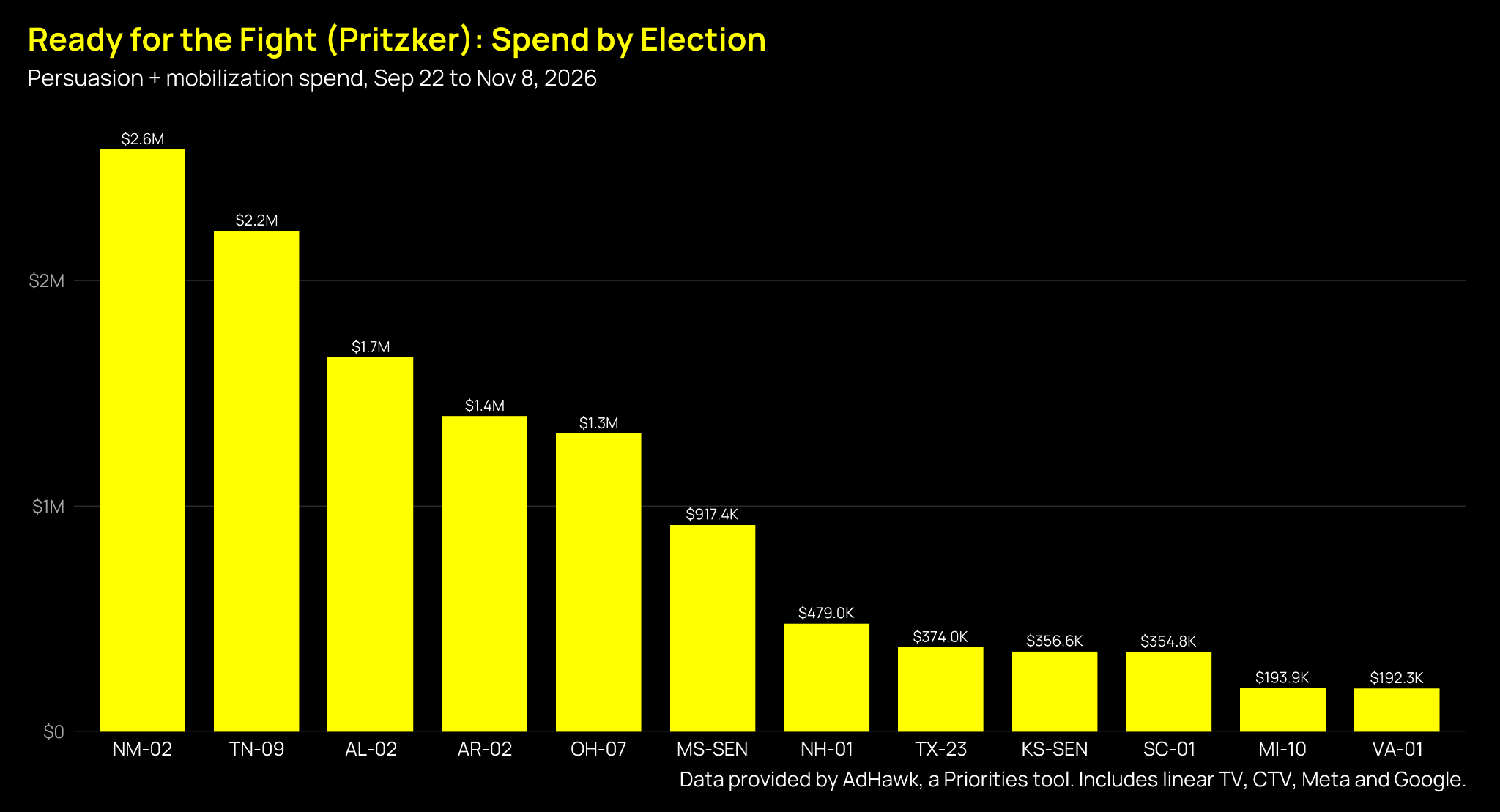
As the name suggests, Ready for the Fight’s ads were combative and often featured personalized attacks on Republican candidates while addressing high costs, corruption, and cuts to healthcare. Rather than boosting specific political allies, Pritzker’s group targeted a mix of battleground and reach battleground seats—some deliberate maneuvering as we head into the early primary season.
The Illinois governor was busy in 2026, spending just over $12 million across linear, streaming, and digital advertising. With most of the 2026 elections now behind us, this tactic has run its course; we’ll see if the billionaire governor pivots toward early persuasion spending for his own candidacy.
Winning Elections Isn’t the Same as Winning Trust
Since the 2026 midterms, political analysts have been debating what the results mean. Did voters reject Republicans, embrace Democrats, or simply vote out whoever they blamed for the high cost of living?
But there’s another question worth asking: Did the midterms change Americans’ confidence in their democracy?
In a new national survey of 4,673 Americans conducted shortly after the midterms, Murmuration found that just over half (51%) said the results made them more optimistic about the country’s direction, and only 42% expected the election to bring at least some meaningful improvements to their lives and communities over the next two years.
The election may have offered a glimpse into how Americans feel about the country’s direction, but their frustrations with government run deeper than which party holds power.
In June, in research conducted with RepresentWomen, we found that more than two-thirds of Americans were dissatisfied with the political system. And despite everything that happened during the midterms, the public’s appetite for change remained remarkably consistent.
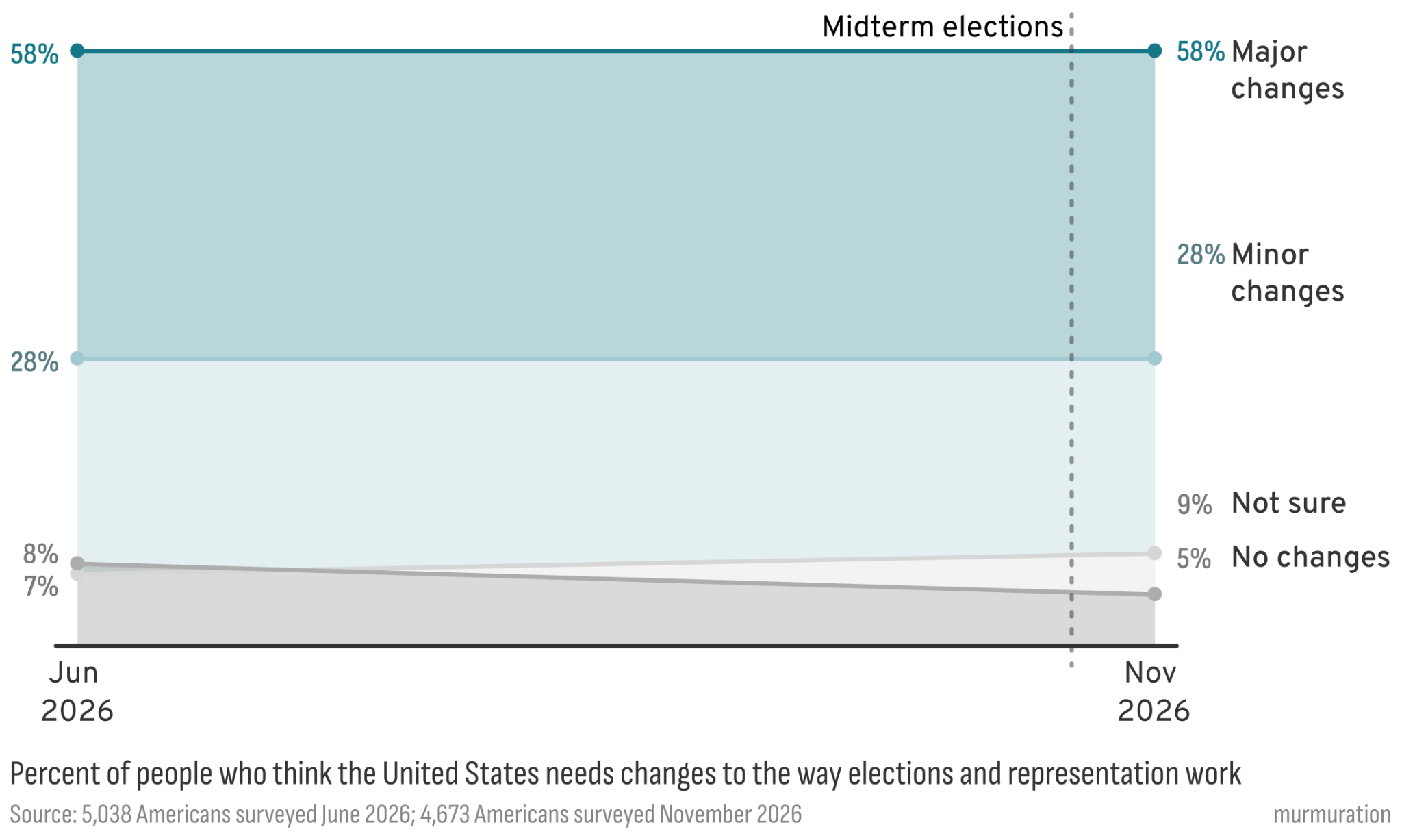
In surveys run in both June and November, 58% of Americans said they wanted major changes to elections and representation. That desire was nearly identical among Democrats, Republicans, and Independents.
So what do Americans actually want to change?
For starters, they want to feel like they have a say in the decisions that affect their lives. Just 7% believe elected officials listen most to ordinary voters, while two-thirds believe they listen most to wealthy donors, special interest groups, or political party leaders. And roughly six in ten say elected officials rarely or never face real consequences for failing to do their jobs well.
Americans also want something worth voting for. In September, we explored whether they believe their vote makes a difference. Our new findings reveal another dimension of the voting experience: only four in ten say they regularly feel like they’re voting for a candidate they genuinely want to win, rather than simply voting to stop another candidate from winning.
And when asked what would make them feel better represented, Americans’ priorities were clear: leaders who keep their promises, deliver meaningful improvements in their lives, and put ordinary people ahead of political parties.
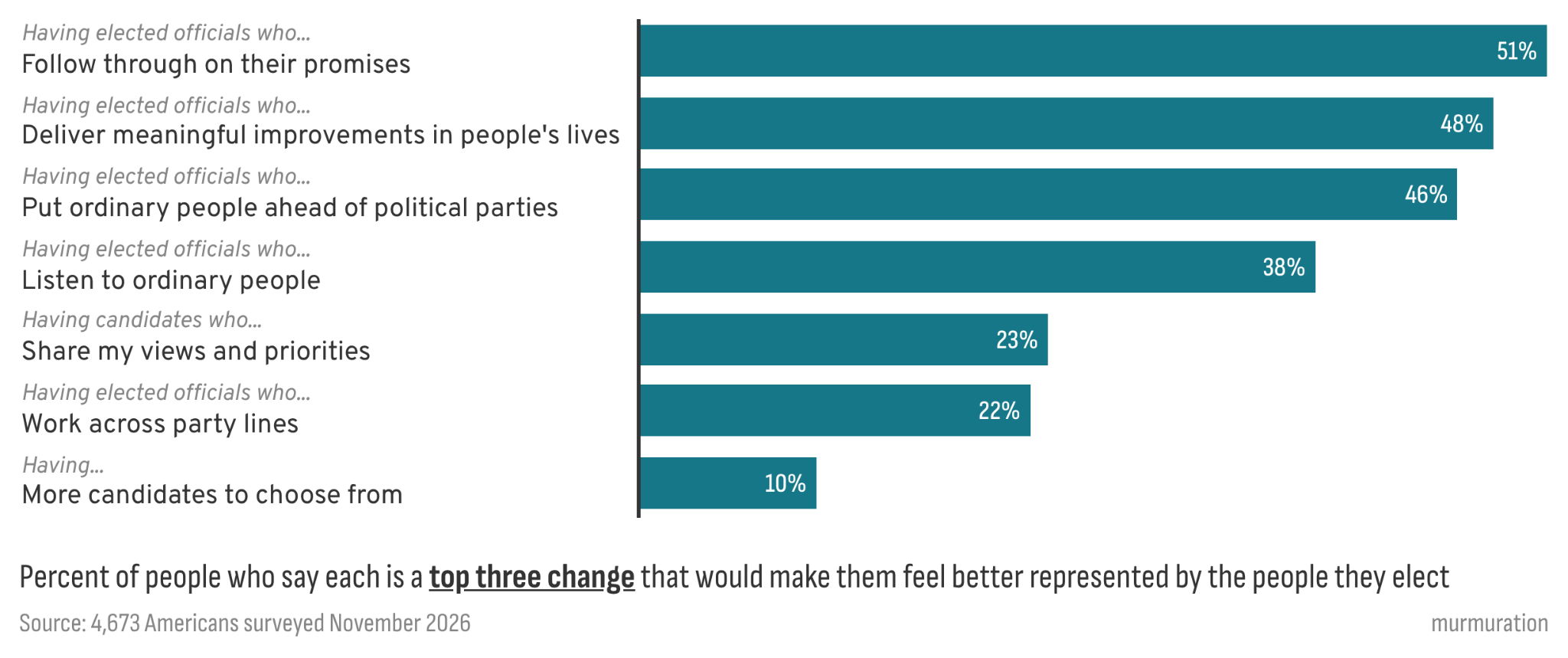
Americans would rather see elected leaders focus on everyday problems and work across party lines than stand firmly behind their party’s agenda. As attachment to the major political parties continues to decline, two-thirds of Americans say a candidate’s own views and experiences matter more when voting than the party and policies they represent.
The connection between people’s everyday lives and their faith in democracy is especially clear. When we asked what would most increase their confidence in elected leaders, three things rose to the top:
Making everyday life more affordable (44%)
Holding elected officials accountable for wrongdoing (40%)
Reducing corruption and conflicts of interest (39%)
This echoes what we’ve found in previous research with Voto Latino: economic pressures shape more than Americans’ policy priorities. They also influence how people experience government, what they expect politics to accomplish, and whether participation feels worthwhile.
What This Means for 2028
For campaigns and organizations preparing for 2028, these findings offer several insights into what Americans value and what they expect from their political leaders.
1. Meaningful choice matters. Americans want to feel that their vote is an expression of what they believe in, not simply a way to prevent an outcome they fear. Political participation should offer people meaningful opportunities to express their values and priorities.
2. Representation goes beyond party affiliation. Americans place greater value on practical problem-solving than party loyalty. They want leaders who exercise independent judgment, understand their communities’ needs, and put ordinary people ahead of political interests.
3. Democracy is experienced through everyday life. Affordability topped the list of things Americans say would increase their confidence in elected leaders. For many, the health of democracy is inseparable from whether their government is addressing the problems they face in their daily lives.
4. Trust requires visible accountability. Americans want more than promises that their voices will be heard. They want transparency about how decisions are made, evidence that their concerns are being addressed, and accountability when elected officials fail to deliver.
The midterms gave many a reason to feel hopeful, but they didn’t resolve the frustrations that have eroded trust in government. The real test isn’t simply whether new leaders deliver on their promises. It’s whether Americans begin to feel that their voices matter, their lives are improving, and the people they elect are answerable to them.
That’s it for FWIW this week. This email was sent to 25,770 readers. If you enjoy reading this newsletter each week, would you mind sharing it on X/Twitter, Threads, or Bluesky? Have a tip, idea, or feedback? Reply directly to this email.
