


This newsletter is brought to you by the donor acquisition approach that helps you turn $1 into $2.
Hi everyone — Patrick Stevenson here. Last summer, I wrote a couple of issues for FWIW about how Democrats are navigating the digital landscape — who’s doing it well, and who isn’t. I used to oversee creator engagement programs at the Biden White House and the Democratic National Committee, and in the past year, I’ve been working with creators directly at Palette Media. The creator space continues to evolve at a breakneck pace, so let’s check in on what’s working and what isn’t.
More on that below, but first…
Digital ad spending, by the numbers:
FWIW, U.S. political advertisers spent around $18 million on Facebook and Instagram ads last week. Here were the top ten spenders nationwide:
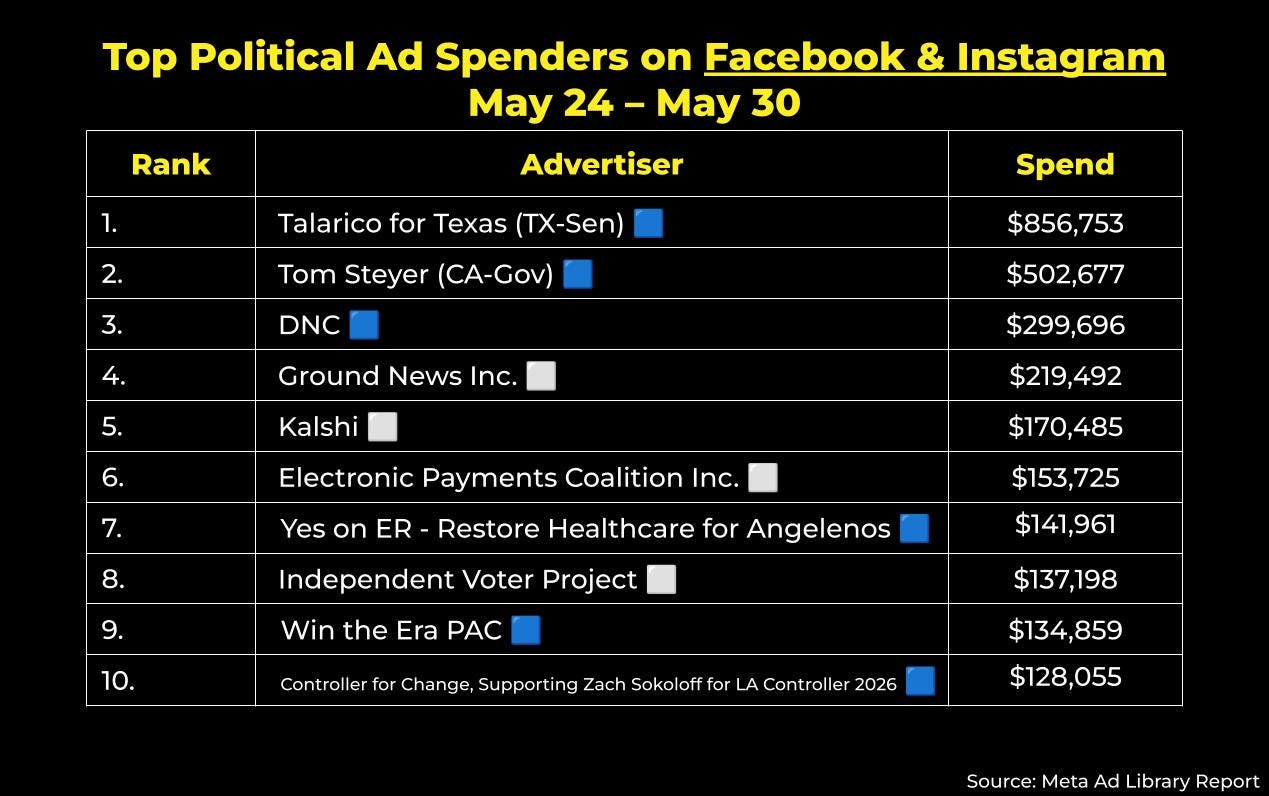
Pete Buttigieg is calling — are you answering? Last week, an old familiar made his way onto the list of top spenders through his Win The Era PAC. Among the ads running are clips of Buttigieg dialing grassroots donors to thank them for their support.
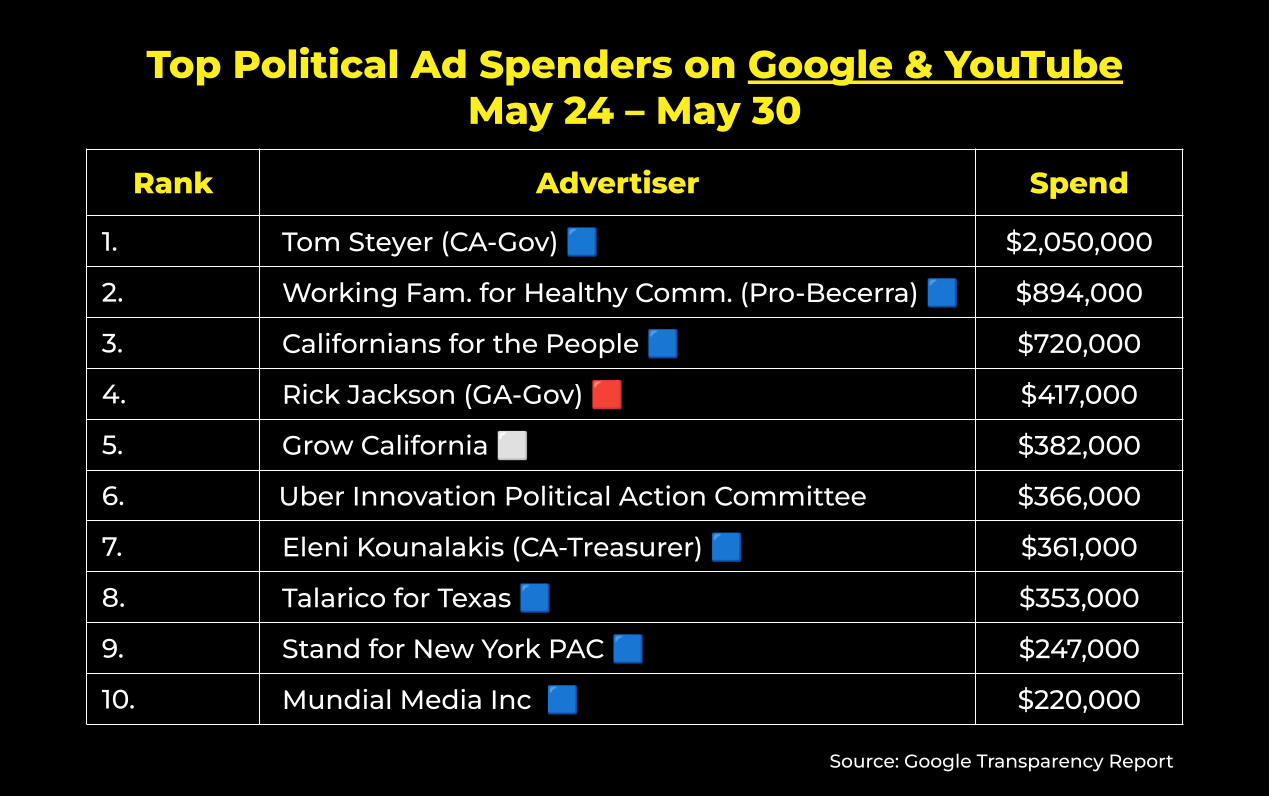
But if you’re not ready to think about 2028 yet, there’s another trend worth watching: Ballot measure campaigns are starting to put down serious money. After Alliance Against Corporate Abuse showed their muscle on Meta, Uber seems to be flexing back on Google and YouTube (see below). As a reminder, the rideshare giant is backing a California-based measure aimed at limiting its liability when customers are harmed.
That was the biggest swap on a spending chart that looks — for perhaps the last time (sad!) — similar to what we’ve been seeing week over week. Otherwise, political advertisers spent around $18.4 million on Google and YouTube ads last week. These were the top ten spenders nationwide:
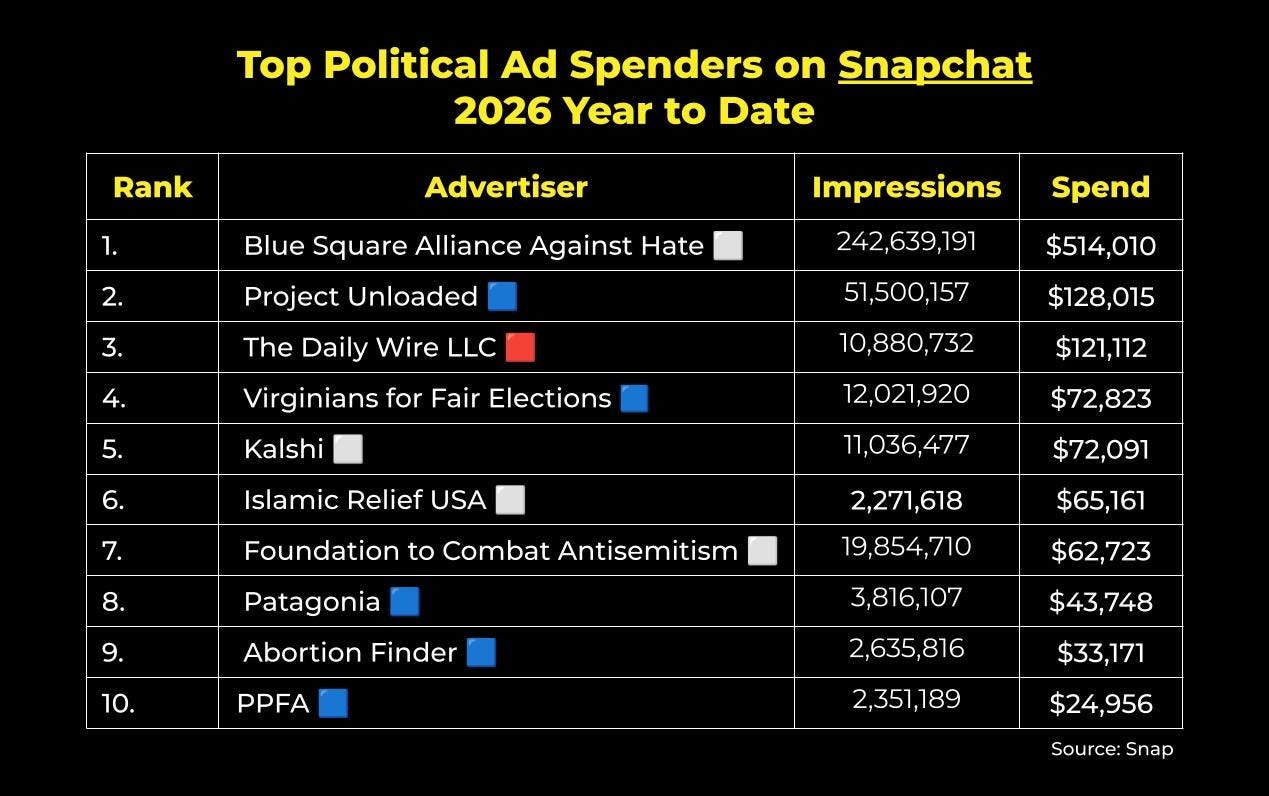
We’re skipping X (formerly Twitter) yet again until there’s new data to share and closing out with Snapchat. To date, political advertisers in the U.S. have spent just over $2.4M on Snap ads in 2026:
Please take our money…
We’ve actually heard this before, and you’d say this too if you finally found an ethical list-growth platform that helped you turn $1 into $2 like clockwork. Join over 900 groups like Everytown, Amnesty International, and Mercy Corps that have found a better way to nail their fundraising goals. Learn more >

Why Your Creator Program Isn't Working
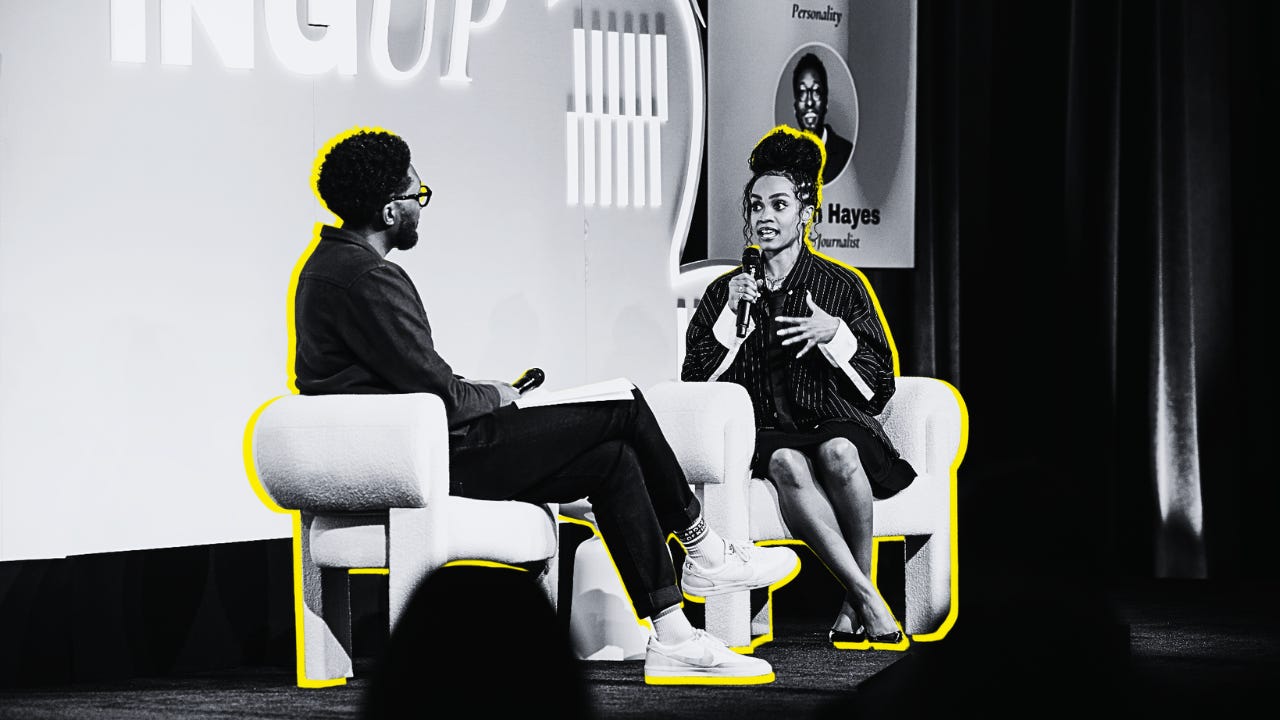
The third annual Trending Up conference wrapped this week in DC, bringing together 270 creators from across news, politics, and lifestyle to connect with progressive organizations and figure out how to drive impact on the issues they care about.
This year, only three elected officials spoke: Gov. Wes Moore, Gov. Maura Healey, and Rep. Sarah McBride. And that was intentional. One of the biggest pieces of feedback the conference organizers got from creators last year was that there were too many politicians on the agenda. The response was more creators and more cultural voices.
In other words, building a conference explicitly for creators who want to engage with progressive politics means accepting that politicians aren’t actually the draw.
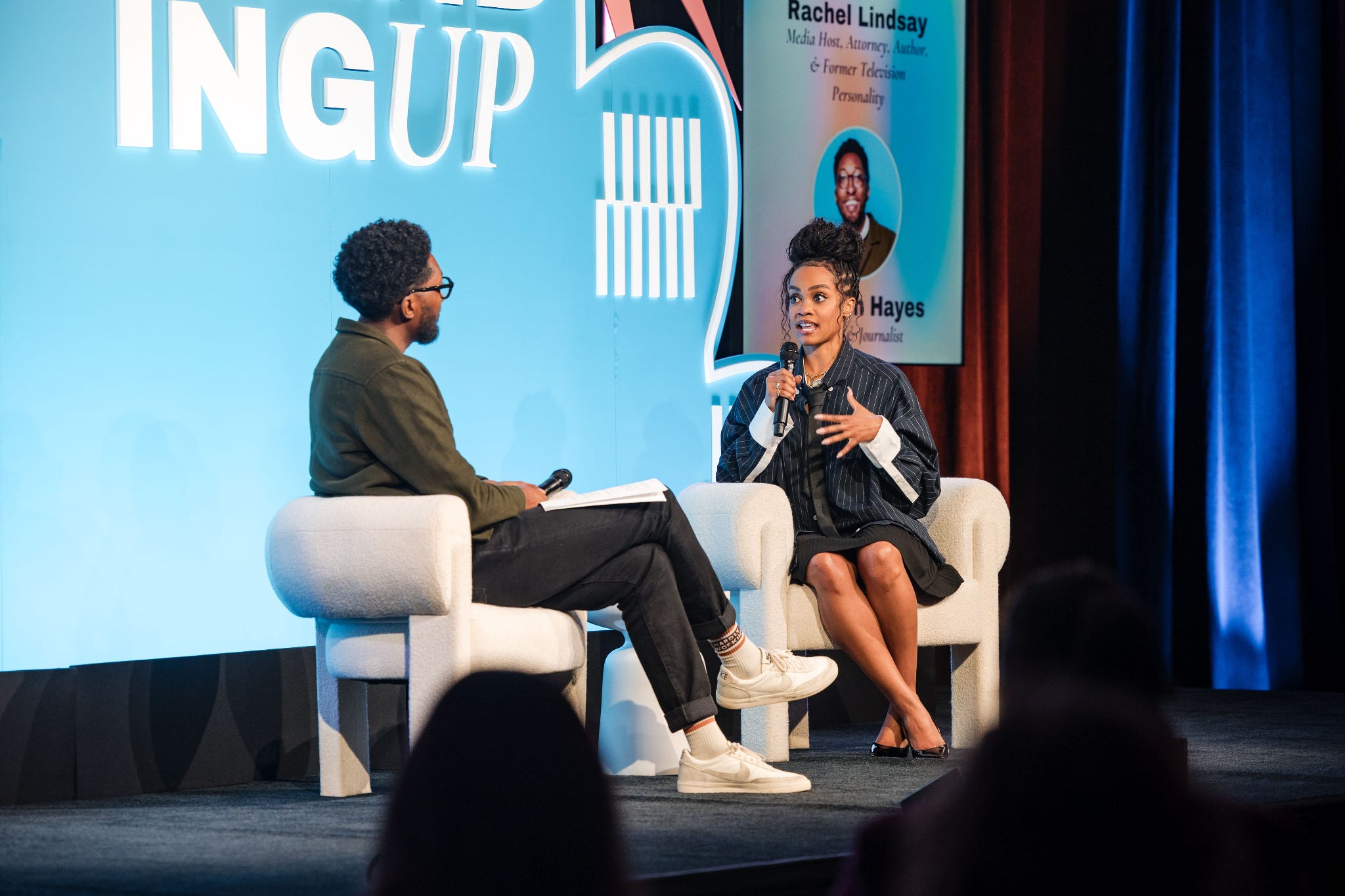
When a creator agrees to meet with an elected official, it’s rarely because they’re excited to film content with a politician. More often, they are looking to build a relationship, understand an issue better, or are just a political junkie freak (who can relate!). Too often, though, the product of these engagements is a stiff, two-shot iPhone video of the creator nodding along while some elected official (whom their audience has never heard of) recites talking points into a tiny mic.
The fix is simple: if you’re going to work with a creator, let them cook!
A reporter shows up to your event because it’s their job. Their company paid for their travel. They have a professional obligation to cover it. Creators have none of that. If a creator comes to your thing, that’s money out of their own pocket — and time away from their laptop, which is their actual business. A well-produced field video with a candidate can run $5-10k to make and will often underperform one where the creator is sitting on their couch talking about Trump.
When you invite a creator to your event, the creator incurs a financial and opportunity cost that journalists simply don’t.
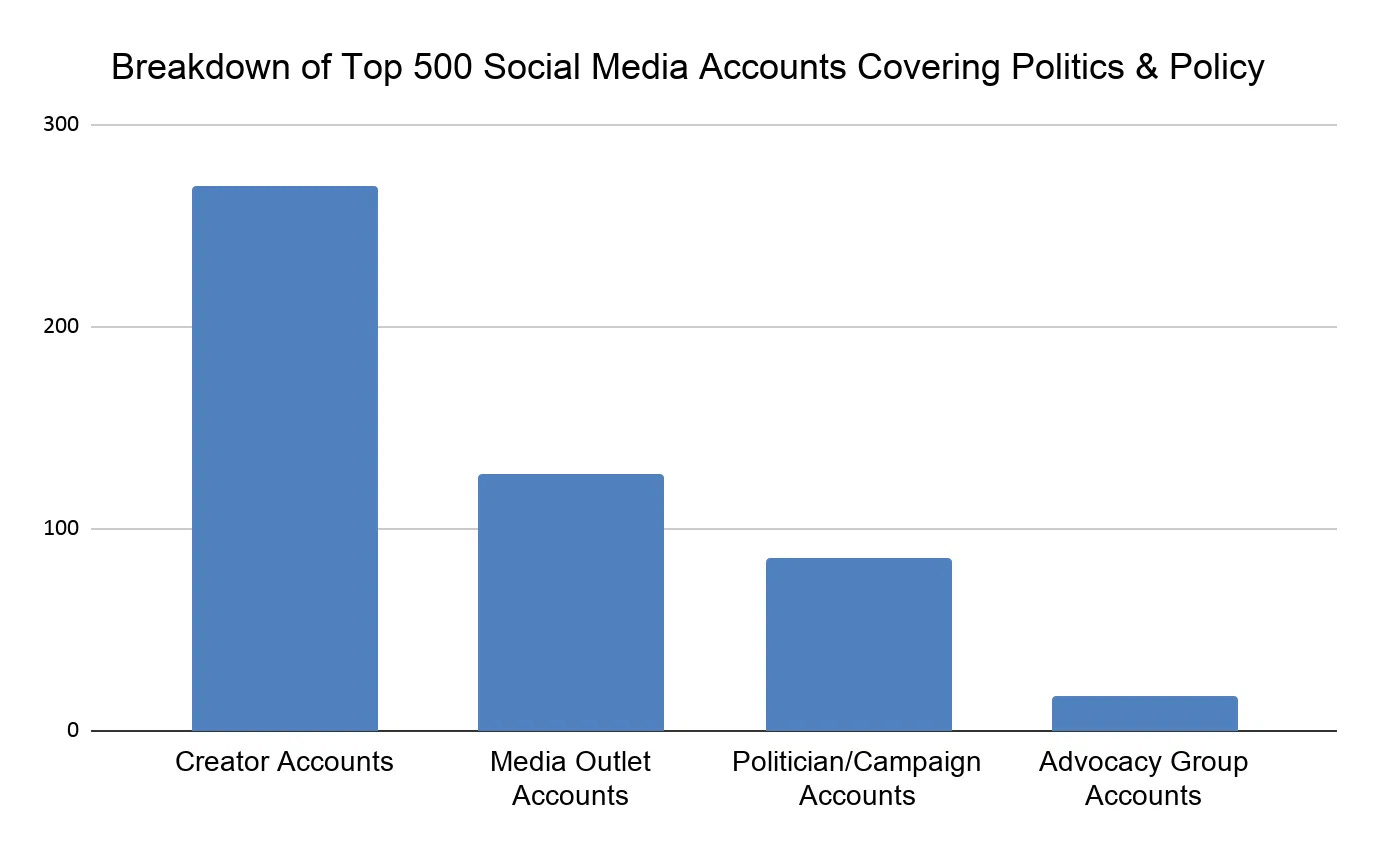
According to a recent M+R analysis of the top 500 social media accounts covering politics and policy in the first quarter of 2026, creator accounts made up more than half the list. That’s the landscape organizations are trying to influence — and most of them are doing it without dedicated staff to navigate it. Instead, they continue to invest far more heavily in their own social media and traditional comms teams.
The DNC has dedicated creator engagement staff. The other major party committees do not. Across the ecosystem, many talented digital and comms staff are doing creator engagement work on top of their existing responsibilities, and they deserve credit for it. But doing creator engagement well requires dedicated staff.
Building real relationships means understanding individual creators’ niches, their audiences, their business models — and that doesn’t happen as a side project. Without proper resources, many organizations put creators on the wrong track — a weird “kind of press” track, where they get the same treatment as a Politico reporter: show up, get access, cover the thing. It doesn’t work because creators aren’t journalists.
There is no way to do effective political creator engagement at scale unless you have talented, reasonably senior staff who are resourced to spend most of their time building relationships with dozens, if not hundreds, of individual creators.
The proof of concept is right in front of us. Trending Up gets better every year — not because more politicians show up, but because the organizers understand what creators actually need and give them room to do what they do best.
Good creator engagement is structural — proper staffing, actual budgets — but it’s also simply knowing the creators you want to work with, and understanding how to let them cook. The campaigns that figure that out are going to have a significant advantage in the years ahead (and not for nothing, many of the people who seem to be running for president are on the right track…but that’s another post!).
People who get that creator work is its own thing are going to continue getting real dividends from it, and those who keep treating creators like journalists will keep asking why their creator program isn’t working.
Please take our money…
We’ve actually heard this before, and you’d say this too if you finally found an ethical list-growth platform that helped you turn $1 into $2 like clockwork. Join over 900 groups like Everytown, Amnesty International, and Mercy Corps that have found a better way to nail their fundraising goals. Learn more >

The Future of the Democratic Party is on the Ballot
Join COURIER and MeidasTouch on Wednesday, June 10 at 7:00 PM ET for the NY-12 Primary Debate, featuring George Conway, Alex Bores, Laura Dunn, Nina Schwalbe, and Micah Lasher.
In one of the country’s most closely watched congressional races, candidates will debate the future of the Democratic Party at a moment of growing frustration, generational change, and political upheaval.
Candidates will debate the issues shaping the 2026 midterms, including affordability and housing, immigration, corruption and money in politics, democracy reform, climate, AI regulation, and American leadership in a second Trump era.
That’s it for FWIW this week. This email was sent to 25,828 readers. If you enjoy reading this newsletter each week, would you mind sharing it on X/Twitter, Threads, or Bluesky? Have a tip, idea, or feedback? Reply directly to this email.
