


This newsletter is brought to you by the donor acquisition approach that helps you turn $1 into $2.
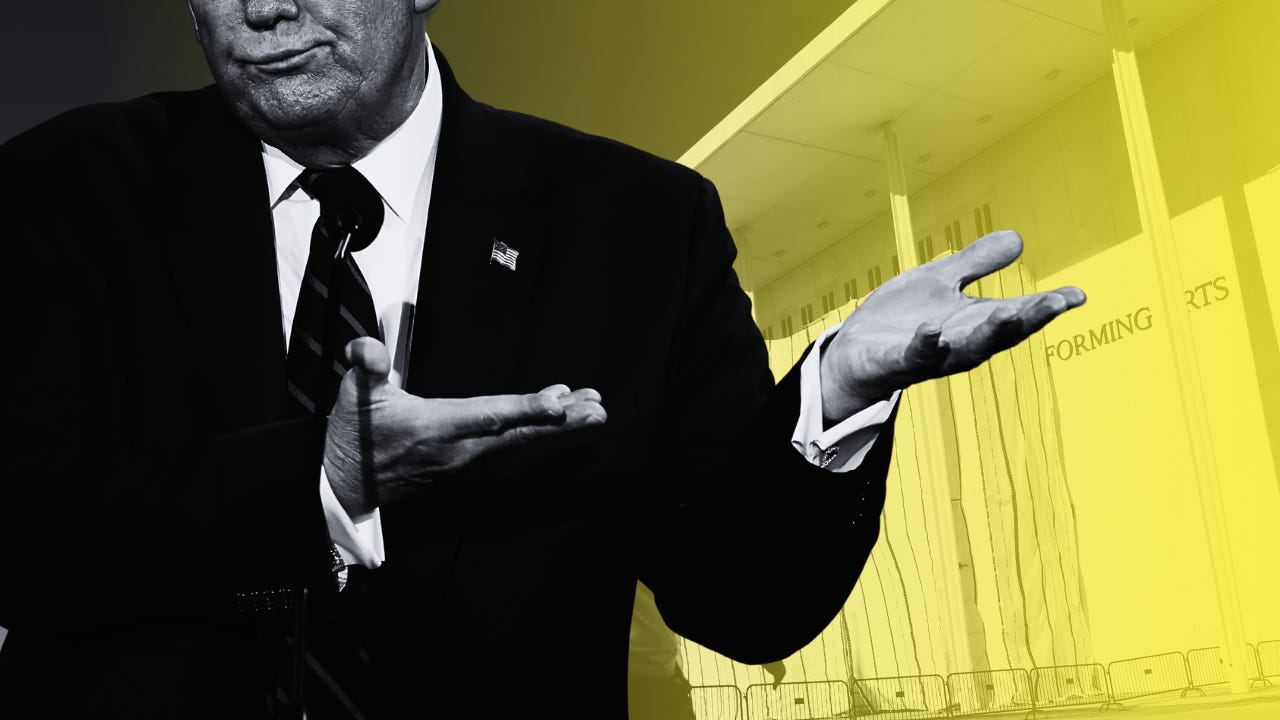
Hey y’all, it’s Max Levy! I’m an independent digital strategist and author of The Short Answer newsletter. In my work with progressive campaigns, organizations, and causes, I’m always on the lookout for innovative ways the left can reach people in today’s attention economy (like paid clipping, which I wrote about for FWIW last year). I’m back today to talk about another fun, creative tactic — and just how much one grassroots group was able to accomplish with only a webcam and some good old fashioned hustle to bring people together around Trump’s name coming off the Kennedy Center.
More on that below, but first…
Digital ad spending, by the numbers:
FWIW, U.S. political advertisers spent around $15 million on Facebook and Instagram ads last week. Here were the top ten spenders nationwide:
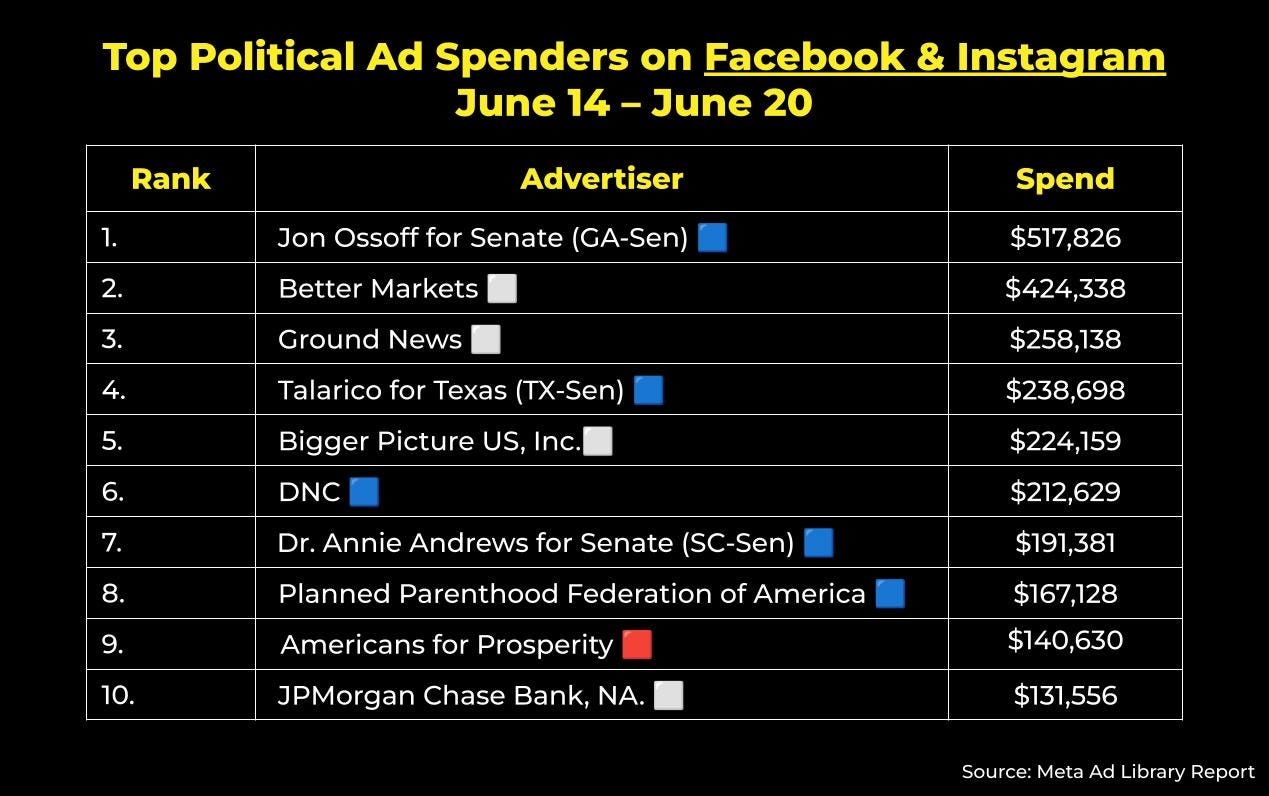
Last year, we got “Diet Pepsi” by Addison Rae by Ben Platt (IYKYK) as the song of the summer. Now, Bigger Picture US, Inc. is working spending overtime, dropping over $224K on Meta political ads just to promote their new song, ”Gotta Be Us (Be The People).” Guess you gotta do whatever it takes to beat out Meg Stalter’s “Prettiest Girl in America.”
Meanwhile, Dr. Annie Andrews landed at the #7 spot (not on the music charts). With her ad dollars and 350K Meta platform followers, she is gearing up to unseat Sen. Lindsay Graham. It’s a race Cook Political Report deems a “Solid R.”
Moving over to Google and YouTube, political advertisers spent around $12.2 million on ads last week. These were the top ten spenders nationwide:
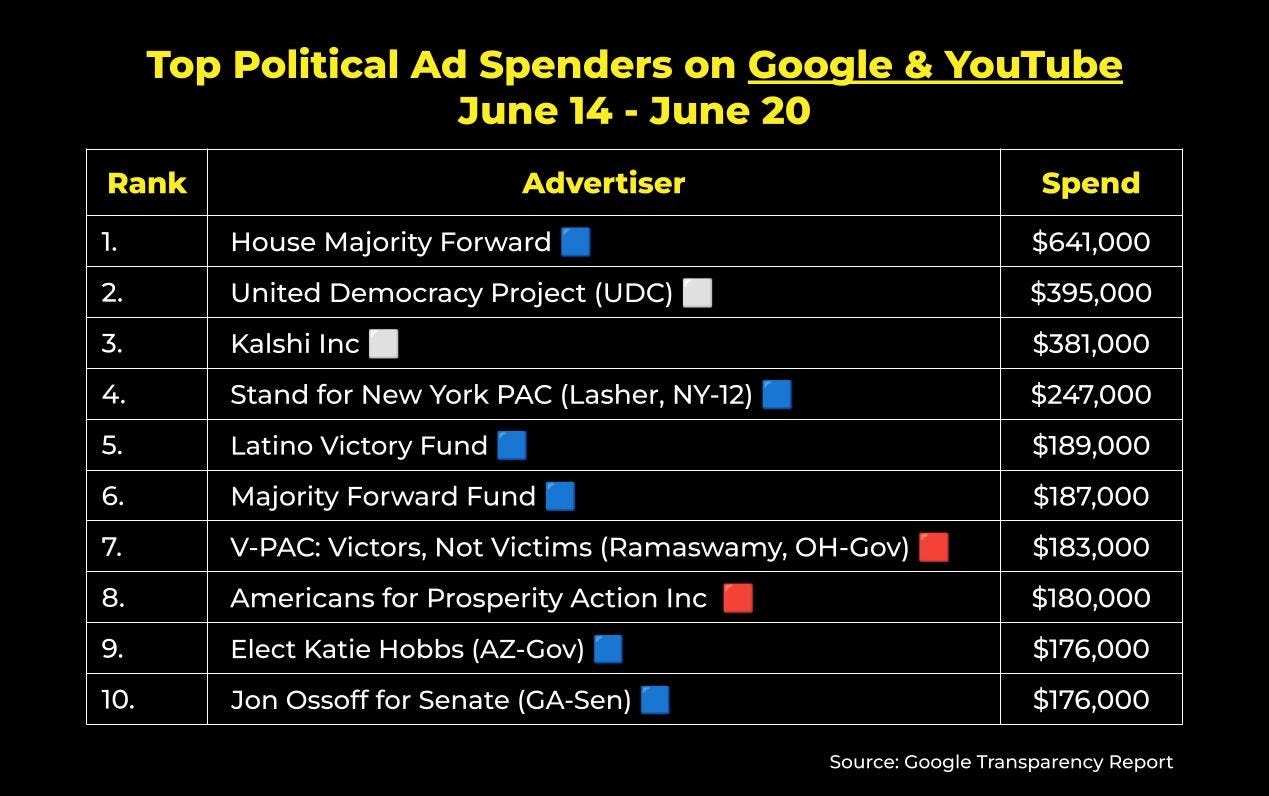
United Democracy Project, AIPAC’s super PAC, came in second on last week’s Google and YouTube charts. Its heaviest spending came in Michigan ($293K) and Maryland ($99.3K). In Maryland, most of that money flowed into three Congressional races, with the greatest focus on the 5th District in support of Adrian Boafo, who went on to win the Democratic nomination.
In Michigan, their spending was spread more evenly across a wider range of races, but the 12th District — home to Rep. Rashida Tlaib — stood out, drawing more $$$ than the rest.
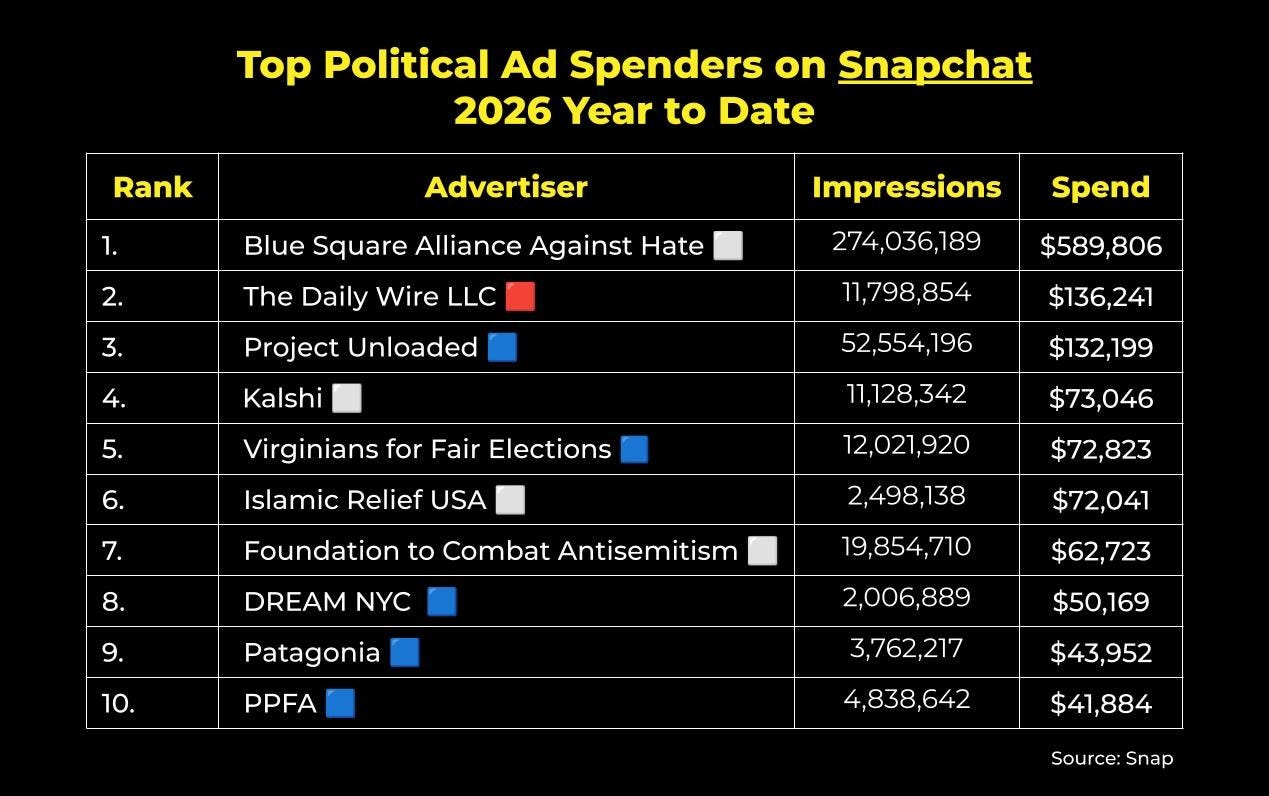
Over on Snapchat political advertisers in the U.S. have spent just over $2.7M in 2026:
Please take our money…
We’ve actually heard this before, and you’d say this too if you finally found an ethical list-growth platform that helped you turn $1 into $2 like clockwork. Join over 900 groups like Everytown, Amnesty International, and Mercy Corps that have found a better way to nail their fundraising goals. Learn more >

We pointed a webcam at a wall — and activated more than 100,000 people
As a longtime Kennedy Center fan, I’d been brainstorming with the local group Hands Off the Arts about creative ways to draw attention to their fight to stop Donald Trump’s closure of the cultural center and save hundreds of jobs. In addition to their weekly Friday protests, we were looking for something that could break through online. Then the perfect opportunity presented itself.
A federal judge ruled that Donald Trump’s takeover of the Kennedy Center was illegal and ordered his name be removed from the building within 14 days.
Not only was this a huge win for Kennedy Center workers specifically, it also resonated symbolically, and the internet lit up with people saying they would pay to watch Trump’s name come down.
Clearly, there was interest. The question was how to channel it.
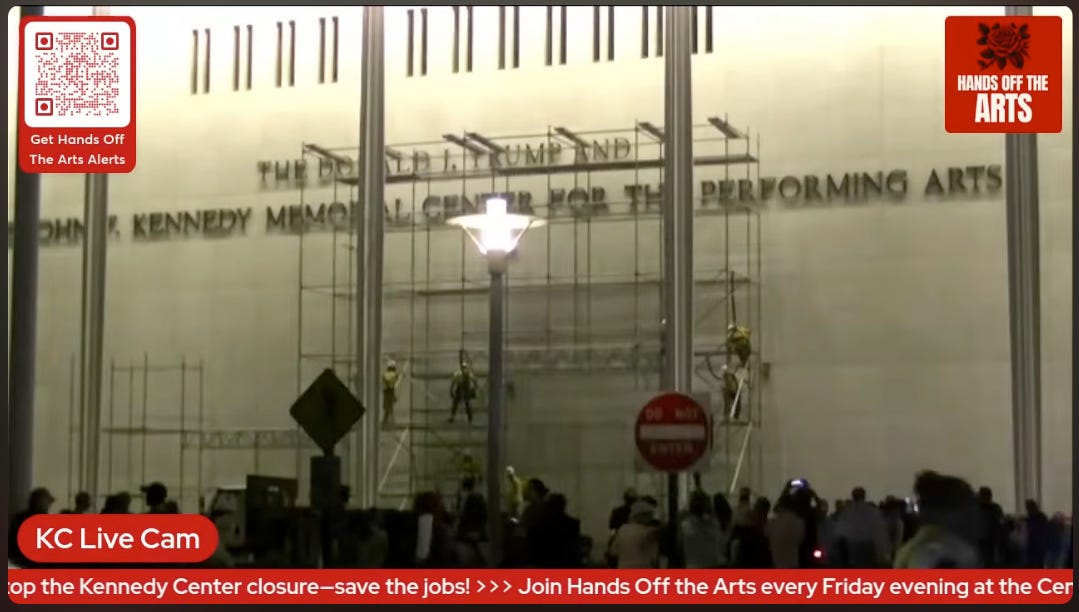
I’d seen enough PandaCams, Casey Wilson’s Rat-Watch, and 24/7 streamers to know there was a tool most progressive organizations overlook that could be the perfect play here: an always-on livestream pointed at the Kennedy Center until they took the name down.
Alongside a scrappy team of volunteers and video pros, we sprinted to launch a livestream that ultimately ran for 3 days. And even though Trump still used a massive (embarrassing) tarp to block the final view, the effort was still a huge success. More than 100,000 people tuned in at some point, Hands off the Arts’ email list grew by 40% overnight, and its social channels also saw real growth.
Always-on livestreams like these are a great tool that more progressive organizations and candidates should take advantage of. Here are some key takeaways for anyone looking to jump in:
In-person organizing is essential. We were operating under a 14-day timer to station a camera, set up the stream, and get out the word. The only reason we were able to find a place where we could leave a camera unsupervised 24/7 with a very specific view of the Kennedy Center in time was because of the relationships Hands off the Arts had built over the last year. Then, when construction started and we wanted to get an even better angle, a dedicated group of volunteers took time away from work to man multiple cameras from the Kennedy Center plaza, in addition to other folks remotely monitoring the livestream itself. This effort required real, on-the-ground hustle, and that kind of infrastructure doesn’t just appear overnight.
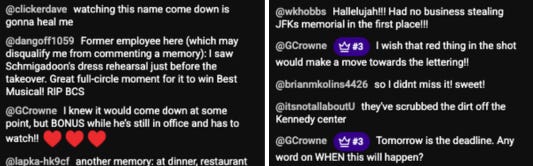
Be there first, and build an online community. Eventually, major media outlets set up their own cameras and streams to try and get in on the action, but by the time they arrived, we’d already been live for more than a day. And even though their shots were “nicer,” people stuck around with us — because we had a chat. They wanted to experience the moment together, and our chat was a real way to be in community with other people.
Capture interest for future engagement in as many ways as possible. We didn’t just stream directly to YouTube. We put the stream on TakeTheNameDown.org, which gave us a place to introduce Hands Off the Arts, collect email signups, and tell a deeper story. We also had a QR code on the feed for signups at all times, plus a rolling ticker at the bottom of the screen reiterating the “Stop the Closure, Save the Jobs” message.
Digital stunts can garner earned media to push reach even farther. What started as a single Washingtonian article announcing the stream turned into an avalanche of print, radio, digital, and television coverage, both about the livestream and for Hands Off the Arts spokespeople in general. That brought more viewers to the stream, which helped more press discover us, and the cycle repeated.
Most importantly: have fun! At its core, the livestream was about capturing an important moment on video. But it was also about creating a shared experience and bringing people across the country together to celebrate a moment of joy. Not everything in politics needs to be doom and gloom all the time — sometimes you just need to point a webcam at a wall and invite the internet to have a little fun. And if you can get a drag queen like Tara Hoot to join in too, even better!
Please take our money…
We’ve actually heard this before, and you’d say this too if you finally found an ethical list-growth platform that helped you turn $1 into $2 like clockwork. Join over 900 groups like Everytown, Amnesty International, and Mercy Corps that have found a better way to nail their fundraising goals. Learn more >
That’s it for FWIW this week. This email was sent to 25,812 readers. If you enjoy reading this newsletter each week, would you mind sharing it on X/Twitter, Threads, or Bluesky? Have a tip, idea, or feedback? Reply directly to this email.
